


BRAEDEN ANDERSON
Welcome to Anderson Insights.
We provide authoritative analysis on securities and commodities regulation, SEC and FINRA enforcement, and legal developments affecting crypto, digital assets, fintech, and financial services, authored by Braeden Anderson.
Please enjoy our legal writings. If you want to talk anything through, send Braeden an email.
Looking for something specific?
The full Anderson Insights archive is now searchable. Use the search bar to find past content by topic, agency, or keyword. Try searching: “SEC v. Jarkesy,” “ATS regulation,” “custody” or “digital assets”

AI Fintech Startups Are Building Money Businesses. Financial Regulation Comes Earlier Than Founders Think.
AI fintech startups may need financial regulatory counsel when their products involve money transmission, payments, custody, RIA registration, broker-dealer registration, digital assets, stablecoins, AML, sanctions, capital formation, or bank partnerships. This article explains the key legal questions founders should ask before launching, scaling, fundraising, or responding to regulatory scrutiny.

Best Lawyers, ChatGPT, and the Future of How Clients Find Securities Regulation Lawyers
Clients searching for a securities regulation lawyer in Boston may soon be doing more than searching Google, asking colleagues, or reviewing law firm websites. They may be asking ChatGPT. Best Lawyers recently announced a ChatGPT app designed to help users find lawyers and law firms through conversational AI.
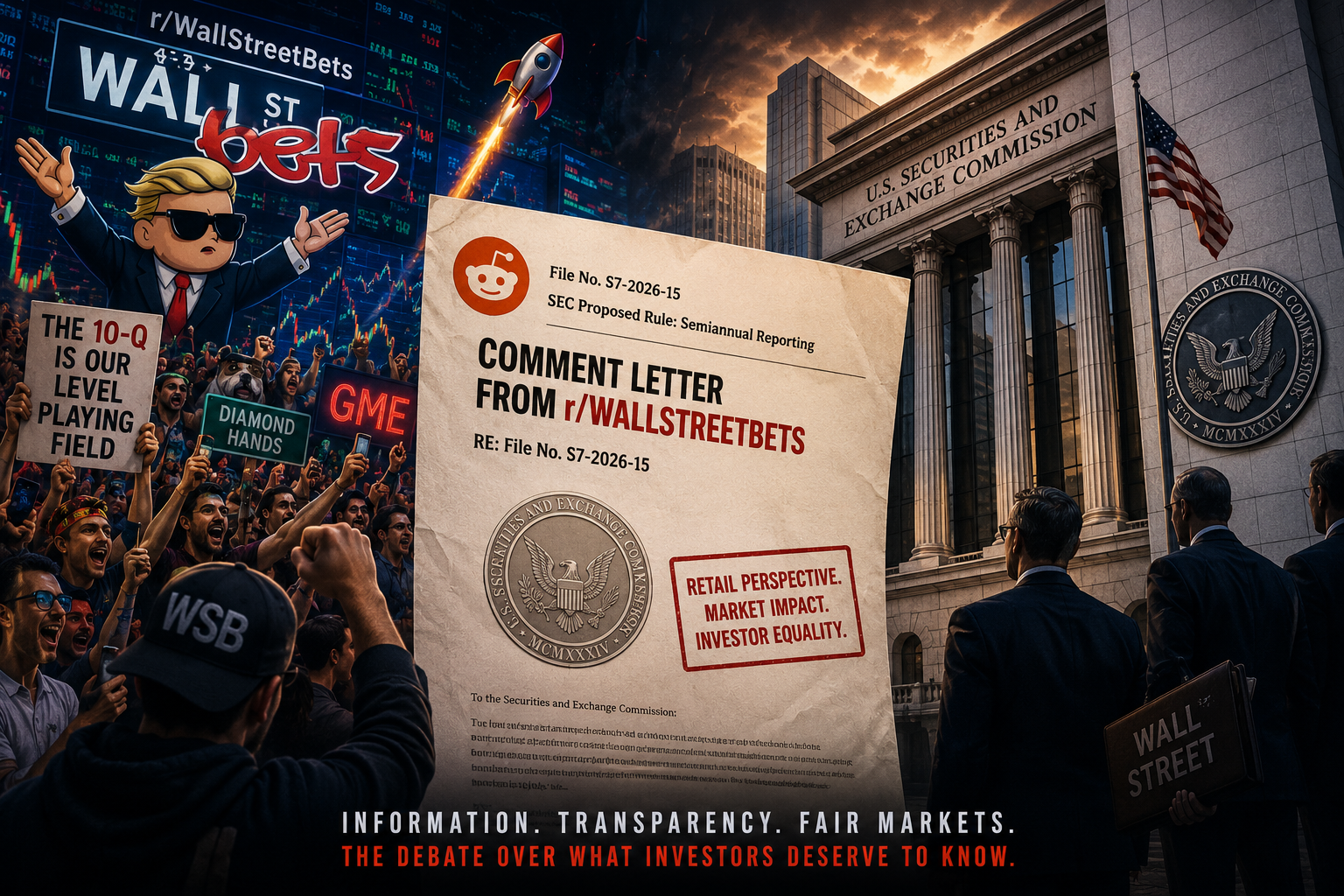
From Meme Stocks to Market Structure: Why WallStreetBets’ SEC Comment Letter Matters
For years, WallStreetBets occupied a strange place in American finance. To some, it was internet chaos masquerading as investing. To others, it became a symbol of populist resistance against Wall Street institutions perceived to hold structural advantages over ordinary investors. At different moments, the community has been described as reckless, manipulative, hilarious, irresponsible, democratizing, dangerous, and misunderstood, often all at once. Now, the same online community that helped fuel the GameStop frenzy, triggered Congressional hearings, embarrassed hedge funds, and forced regulators to confront the power of coordinated retail trading has entered a very different arena: SEC rulemaking.
SEC Moves Toward Rescinding “No-Deny” Settlement Policy
The White House is reviewing the SEC’s plan to rescind its long-standing “no admit, no deny” settlement policy, often criticized as a “gag rule.” The proposal, listed by OIRA as “Rescission of Policy Regarding Denials in Settlements of Enforcement Actions,” could reshape SEC enforcement settlements by allowing companies and individuals to resolve cases without being barred from publicly disputing the allegations.
SEC Proposes Optional Semiannual Reporting Regime for U.S. Public Companies
On May 5, 2026, the Securities and Exchange Commission proposed one of the most consequential changes to the U.S. public company disclosure regime in decades: an optional framework that would permit Exchange Act reporting companies to file semiannual reports instead of quarterly reports. Braeden Anderson breaks it all down.