

President Trump’s May 19, 2026 Executive Order on fintech innovation directs federal financial regulators to reexamine whether their existing rules, guidance, supervisory practices, and application processes are unnecessarily slowing the integration of fintech firms, digital assets, and innovative financial technology into the regulated financial system.
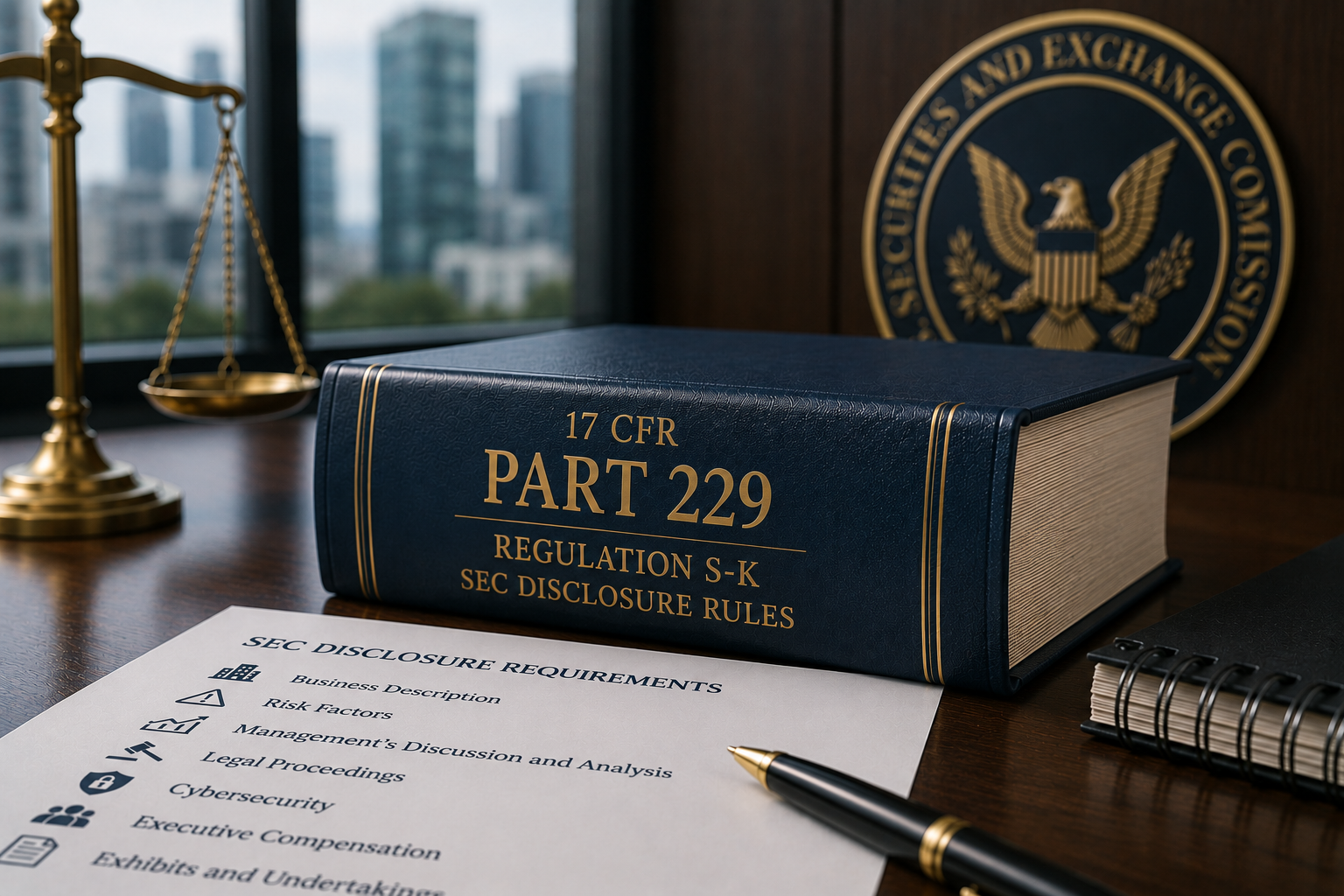
A practical guide to 17 CFR Part 229, Regulation S-K, the SEC’s narrative disclosure rules for business descriptions, risk factors, MD&A, cybersecurity, legal proceedings, non-GAAP measures, executive compensation, governance, exhibits, and public company reporting.
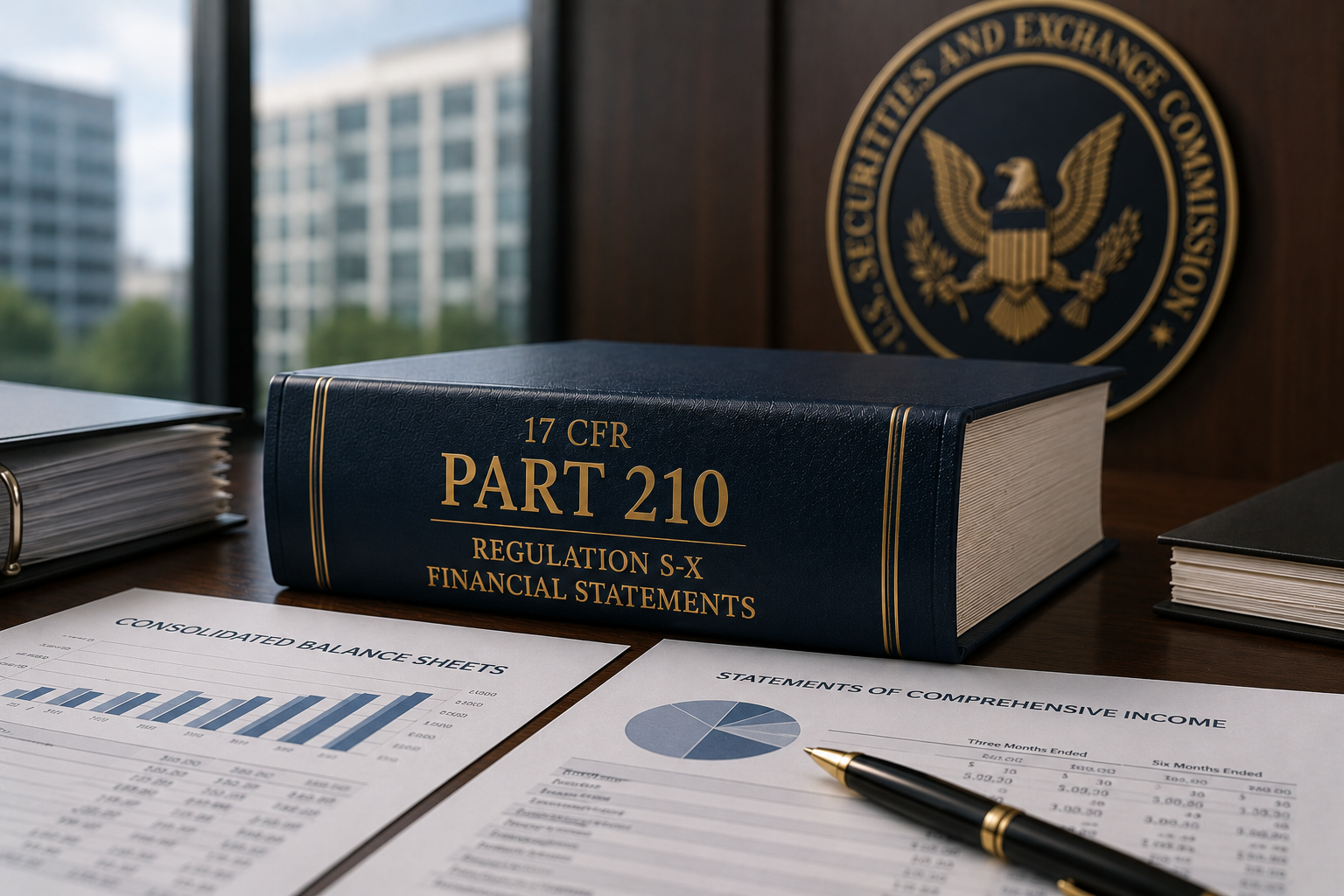
A practical guide to 17 CFR Part 210, Regulation S-X, the SEC’s rules for financial statements, auditor independence, accountants’ reports, acquired business financials, pro forma financial information, internal controls, and public company reporting.
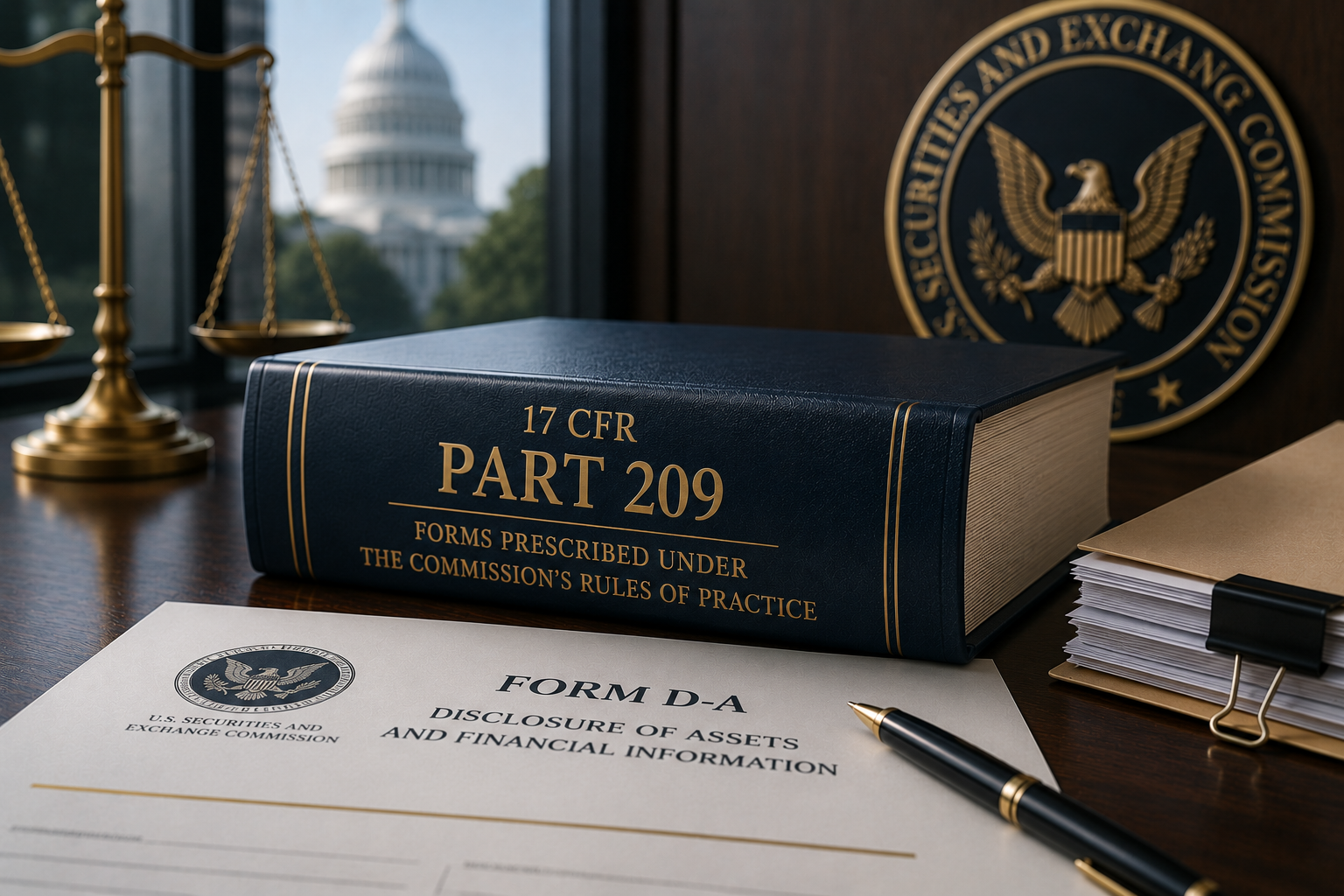
A practical guide to 17 CFR Part 209, the SEC’s rules on forms prescribed under the Rules of Practice, including Form D-A for disclosure of assets and financial information in SEC enforcement, penalty, disgorgement, collection, and ability-to-pay matters.
A practical guide to 17 CFR Part 205, the SEC attorney conduct rules governing lawyers appearing and practicing before the Commission in issuer representations, including up-the-ladder reporting, issuer-as-client duties, supervisory attorney responsibilities, subordinate attorney duties, sanctions, discipline, and no private right of action.
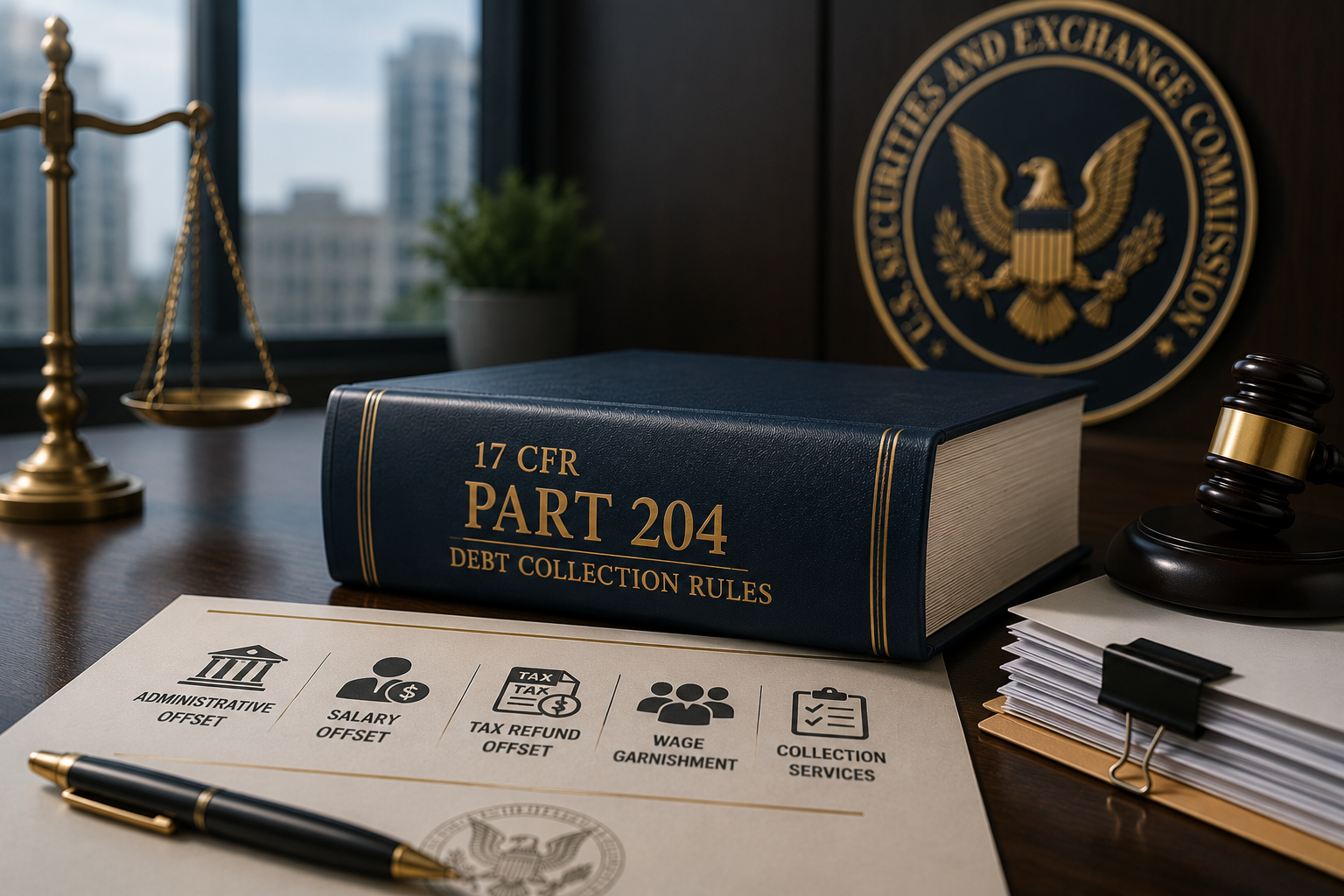
A practical guide to 17 CFR Part 204, the SEC’s rules on debt collection, administrative offset, salary offset, tax refund offset, administrative wage garnishment, credit bureau reporting, collection services, and collection agency referrals.
A practical guide to 17 CFR Part 203, the SEC’s rules on investigations, formal investigative proceedings, subpoenas, testimony transcripts, witness rights, and information obtained in SEC investigations and examinations.
A practical guide to 17 CFR Part 202, the SEC’s rules on informal procedures, pre-filing assistance, interpretive advice, enforcement activities, cooperation, criminal referrals, Investment Company Act applications, and PCAOB review.
A practical guide to 17 CFR Part 201, the SEC Rules of Practice governing administrative proceedings, OIPs, filings, motions, subpoenas, hearings, appeals, sanctions, temporary cease-and-desist orders, disgorgement, penalties, and Fair Funds.
17 CFR Part 200 explains the SEC’s organization, statutory authority, division responsibilities, regional offices, ethics rules, and delegated authority. This guide explains what the rule says and why it matters for SEC investigations, examinations, broker-dealer issues, investment adviser matters, disclosure questions, and financial regulatory strategy.

AI fintech startups may need financial regulatory counsel when their products involve money transmission, payments, custody, RIA registration, broker-dealer registration, digital assets, stablecoins, AML, sanctions, capital formation, or bank partnerships. This article explains the key legal questions founders should ask before launching, scaling, fundraising, or responding to regulatory scrutiny.

Clients searching for a securities regulation lawyer in Boston may soon be doing more than searching Google, asking colleagues, or reviewing law firm websites. They may be asking ChatGPT. Best Lawyers recently announced a ChatGPT app designed to help users find lawyers and law firms through conversational AI.
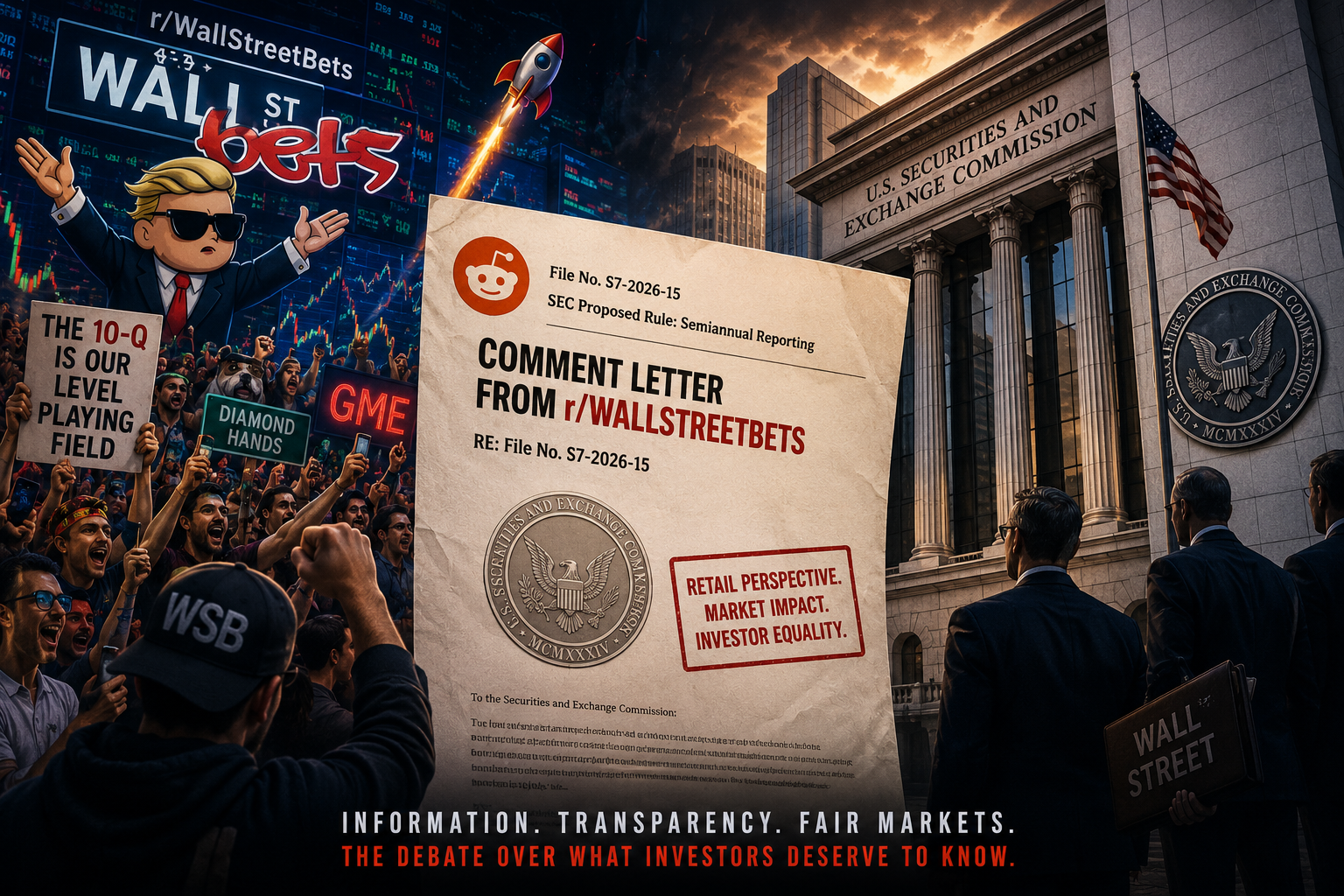
For years, WallStreetBets occupied a strange place in American finance. To some, it was internet chaos masquerading as investing. To others, it became a symbol of populist resistance against Wall Street institutions perceived to hold structural advantages over ordinary investors. At different moments, the community has been described as reckless, manipulative, hilarious, irresponsible, democratizing, dangerous, and misunderstood, often all at once. Now, the same online community that helped fuel the GameStop frenzy, triggered Congressional hearings, embarrassed hedge funds, and forced regulators to confront the power of coordinated retail trading has entered a very different arena: SEC rulemaking.
The White House is reviewing the SEC’s plan to rescind its long-standing “no admit, no deny” settlement policy, often criticized as a “gag rule.” The proposal, listed by OIRA as “Rescission of Policy Regarding Denials in Settlements of Enforcement Actions,” could reshape SEC enforcement settlements by allowing companies and individuals to resolve cases without being barred from publicly disputing the allegations.
On May 5, 2026, the Securities and Exchange Commission proposed one of the most consequential changes to the U.S. public company disclosure regime in decades: an optional framework that would permit Exchange Act reporting companies to file semiannual reports instead of quarterly reports. Braeden Anderson breaks it all down.
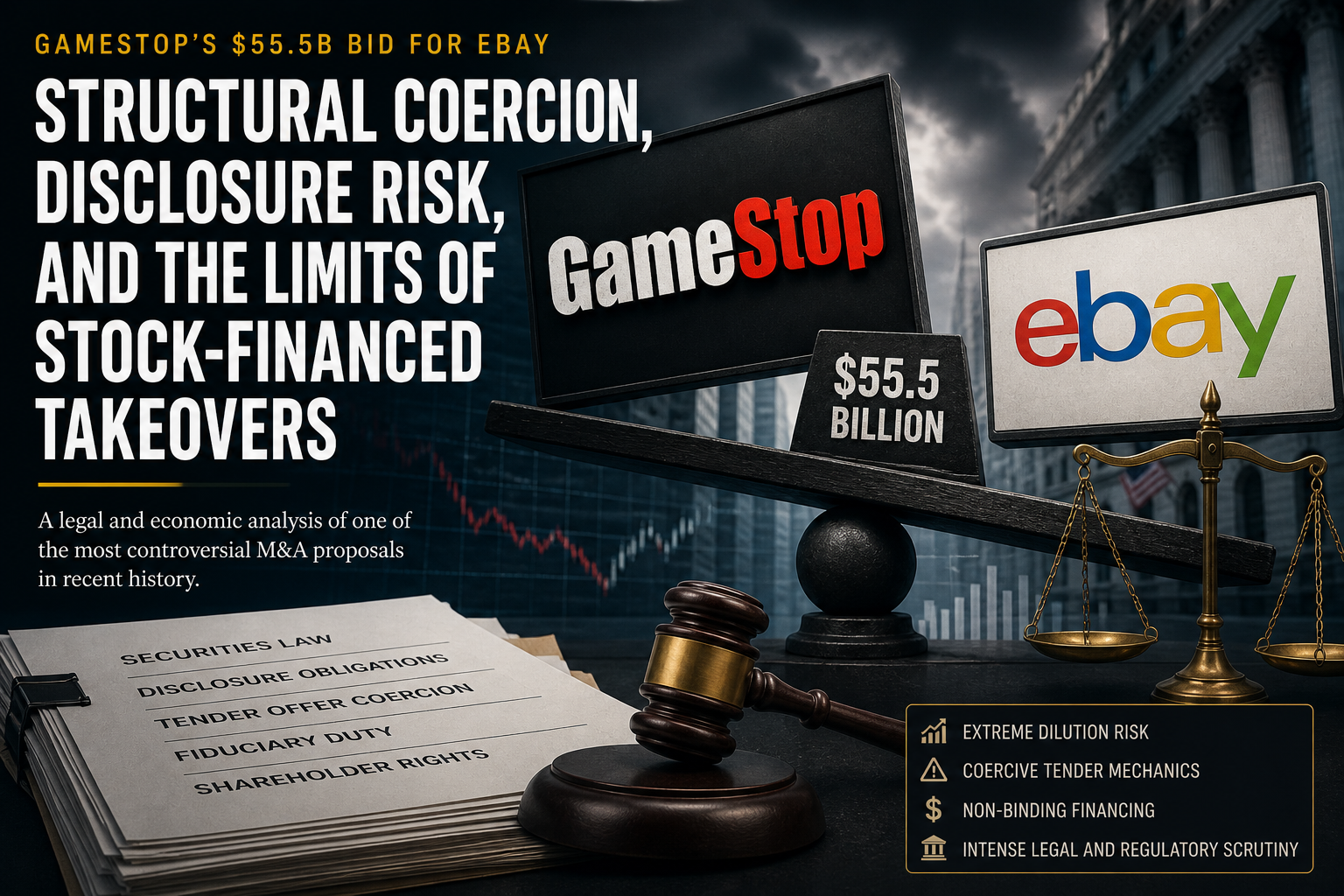
GameStop’s proposed $55.5 billion acquisition of eBay presents a highly controversial and complex case in modern mergers and acquisitions, raising significant securities law, corporate governance, and disclosure issues. The deal highlights the risks of using volatile stock as acquisition currency, particularly where massive dilution, non-binding financing commitments, and coercive tender offer structures are involved. Legal scrutiny is likely to focus on compliance with SEC disclosure requirements under the Securities Act and Exchange Act, as well as Delaware fiduciary duty standards under cases like Unocal and Airgas. As markets react and shareholders assess the true economic impact of the transaction, the proposal underscores the limits of aggressive, stock-financed takeovers in today’s regulatory and financial environment.
The CFTC’s Division of Market Oversight and Division of Clearing and Risk issued Letter No. 26-13 on May 4, 2026, granting supplemental no-action relief that allows Bitnomial Clearinghouse to replace QC Clearing for Railbird Contracts while removing prior restrictions on third-party intermediation, a development that signals increased regulatory flexibility within the swap reporting and recordkeeping framework under Parts 43 and 45; the relief remains conditioned on full collateralization, real-time trade transparency, and robust recordkeeping obligations, reinforcing that while the Commission continues to accommodate evolving derivatives market structures, particularly in the context of event-based and binary-style contracts, it is doing so within a controlled framework that preserves oversight, mitigates risk, and maintains the integrity of core compliance requirements under the Commodity Exchange Act.
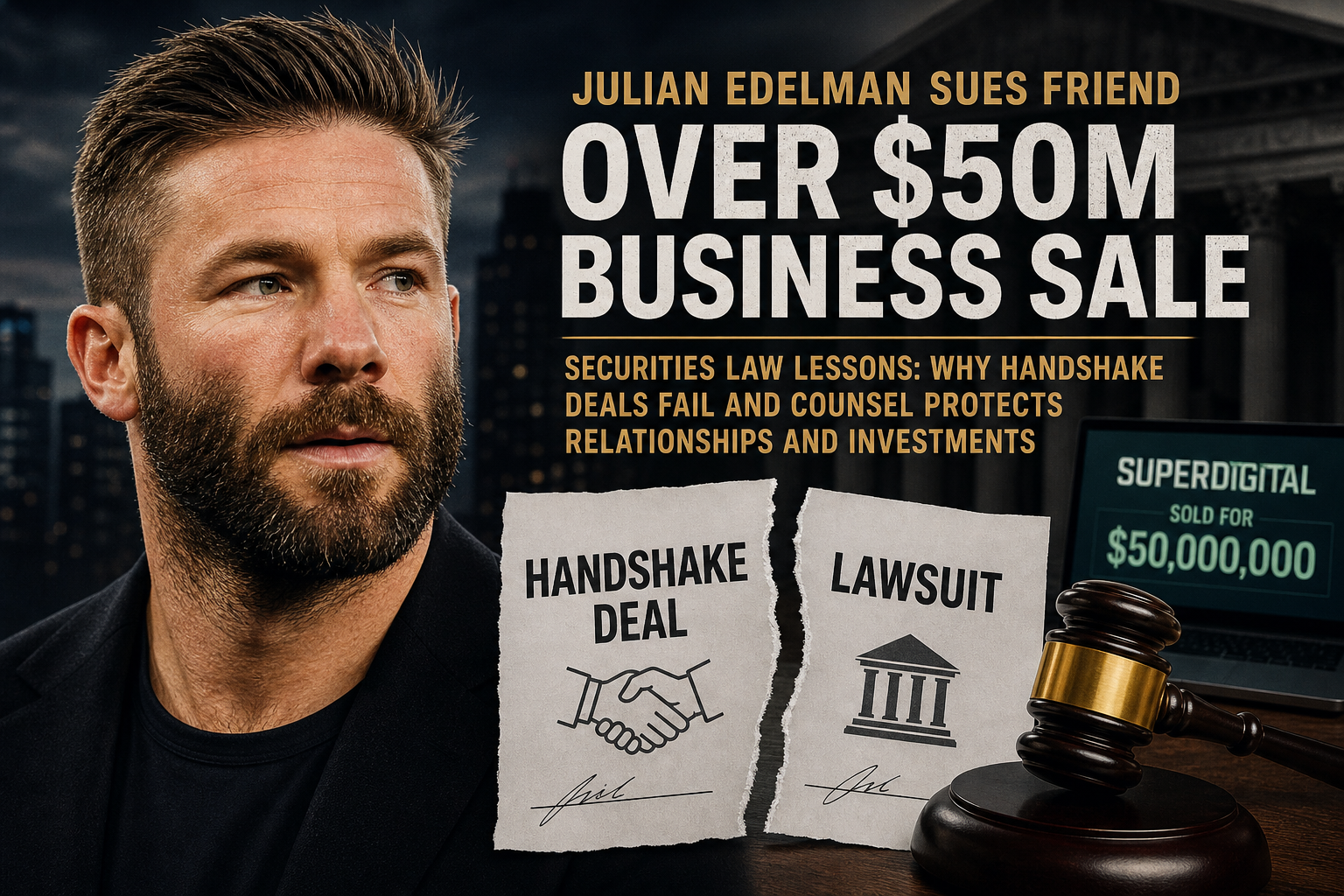
Julian Edelman’s lawsuit over a $50M business sale highlights critical securities law risks. Learn why handshake deals fail and why legal counsel is essential in equity and partnership agreements.

U.S. financial regulators have initiated a coordinated and increasingly focused review of the private credit market, reflecting growing concern regarding liquidity pressures, valuation practices, and potential systemic risk.
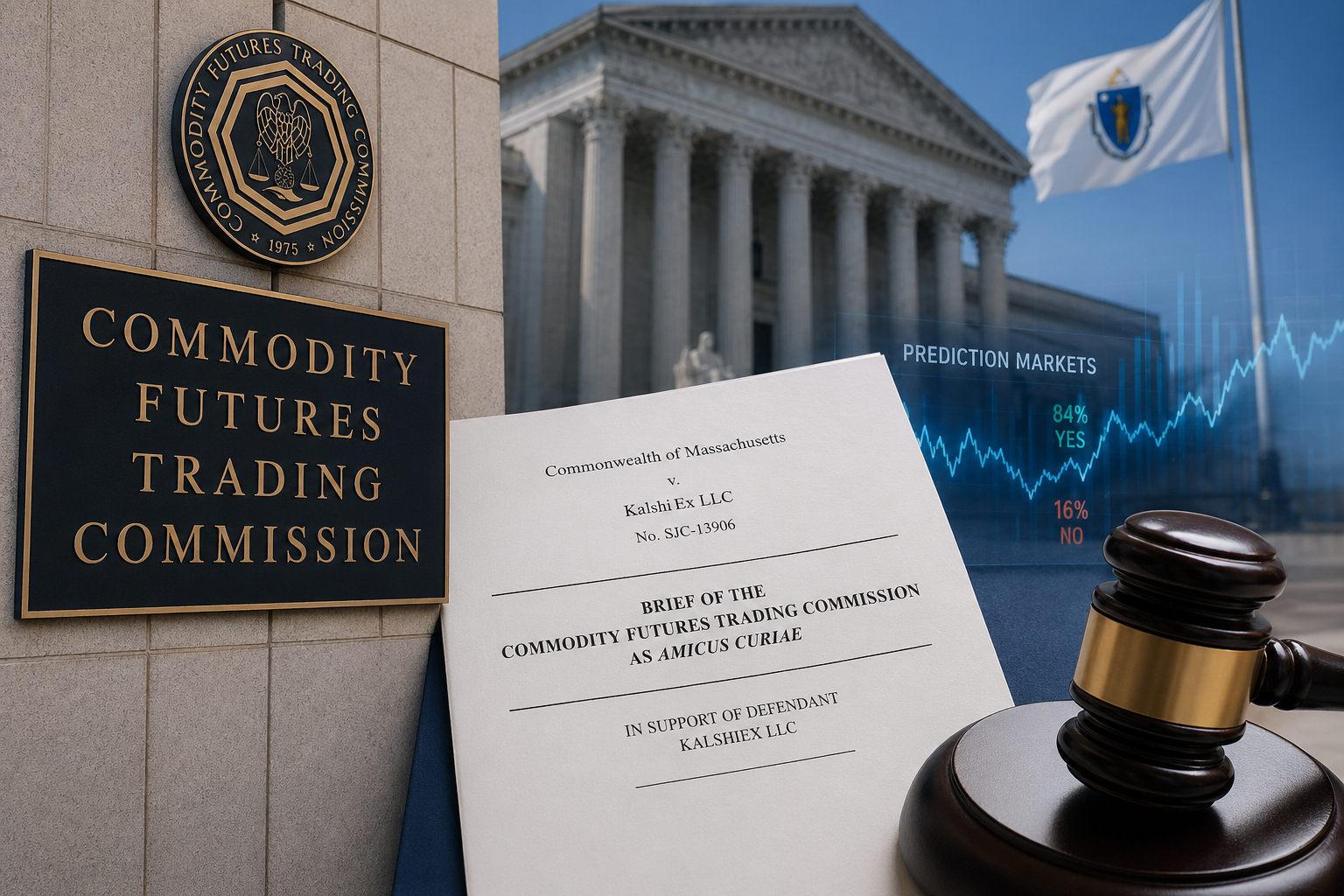
On April 24, 2026, the Commodity Futures Trading Commission submitted an amicus brief before the Massachusetts Supreme Judicial Court in Commonwealth of Massachusetts v. KalshiEx LLC, reinforcing its position that event contract markets, commonly referred to as prediction markets, fall within the Commission’s exclusive jurisdiction under the Commodity Exchange Act.
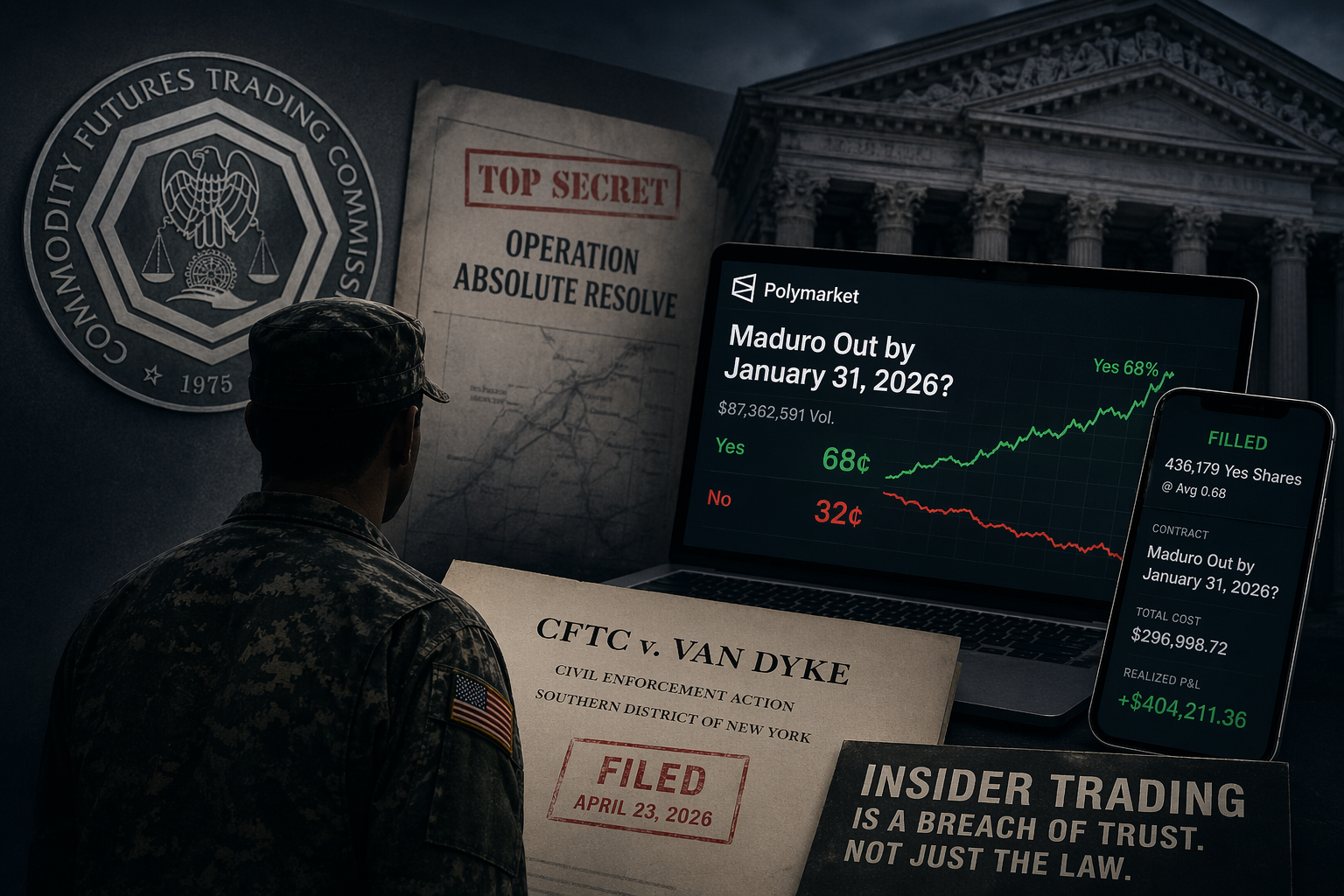
In CFTC v. Van Dyke, filed in the Southern District of New York on April 23, 2026, the Commission charged an active-duty U.S. Army service member with insider trading based on the alleged misuse of classified information tied to a planned U.S. operation involving Nicolás Maduro. The defendant is alleged to have generated more than $400,000 in profits through trades on Polymarket event contracts.

In the law of securities regulation, procedure often decides substance. That is what makes the Lek Securities matter so important. The case is not only about whether the New York Stock Exchange got the merits right when it sanctioned Lek Securities. It is also about what happens when the Securities and Exchange Commission, which Congress placed between SRO discipline and judicial review, takes the better part of a decade to do its job.

New York just took a swing at Coinbase. This is the latest case in a growing wave of state-level challenges targeting prediction markets. States are moving to classify these platforms as unlicensed gambling operations, as market participants and federal regulators frame them as legitimate financial products.
The Commodity Futures Trading Commission, along with the federal government, has not been shy about defending its jurisdiction over event contracts, taking the position that these markets fall within the federal derivatives framework under the Commodity Exchange Act. This is part of a widening, multi-front battle between state regulators and federal authorities over who gets to define and oversee prediction markets.

The SEC and CFTC proposed amendments to Form PF that would significantly reduce reporting burdens by raising filing thresholds and streamlining requirements. While many advisers would fall out of scope, regulators would retain visibility over most assets, reflecting a shift toward focusing oversight on larger, potentially systemic private fund managers.

Allbirds’ pivot from sustainable footwear to artificial intelligence infrastructure has captured investor attention while raising legal and strategic concerns. The company plans to sell its core shoe business and rebrand as “Newbird AI,” with a reported $50 million investment in GPU computing. Although the announcement briefly boosted its stock, gains quickly reversed as questions emerged about execution and scale.

FINRA has modernized the mechanics of entry into the broker-dealer regulatory framework. The April 2026 rollout of the enhanced New Member Application (Form NMA) reflects a deliberate effort to standardize, digitize, and streamline the Membership Application Program (MAP). While FINRA has been clear that the underlying Standards for Admission remain unchanged, the redesigned process materially affects how those standards are demonstrated, evaluated, and ultimately satisfied.

Geopolitical conflict creates immediate and complex disclosure obligations for public companies. Under Section 10(b) of the Securities Exchange Act, Rule 10b-5, and Item 303 of Regulation S-K, issuers must evaluate and disclose known trends and uncertainties, including the impact of war, sanctions, supply chain disruption, and cybersecurity risk, where reasonably likely to affect financial condition or results of operations. Recent SEC guidance, including its Ukraine-related comment letters, reinforces that geopolitical events must be analyzed across MD&A, risk factors, financial statements, and disclosure controls.

On April 16, 2026, the Securities and Exchange Commission issued a concept release soliciting public comment on the Consolidated Audit Trail (CAT) and related audit trails and data sources used in the oversight of U.S. securities markets. The release initiates what the Commission describes as a comprehensive review of the CAT’s purpose, structure, cost, and scope, and signals that more fundamental changes to the system may be under consideration.

The SEC has drawn a new line between software and securities intermediaries. This analysis examines the implications for DeFi interfaces, transaction-based fees, and evolving market structure.
The recent decision in United States v. Heppner should prompt every company, executive, founder, investor, and professional to revisit how they use artificial intelligence tools for legal and compliance issues. An AI platform is not a lawyer. Asking ChatGPT, Claude, Gemini, or any similar tool for legal guidance does not create an attorney-client relationship. It does not transform the user’s prompt into a privileged communication. And it does not place the exchange beyond the reach of prosecutors, regulators, civil litigants, or discovery subpoenas.